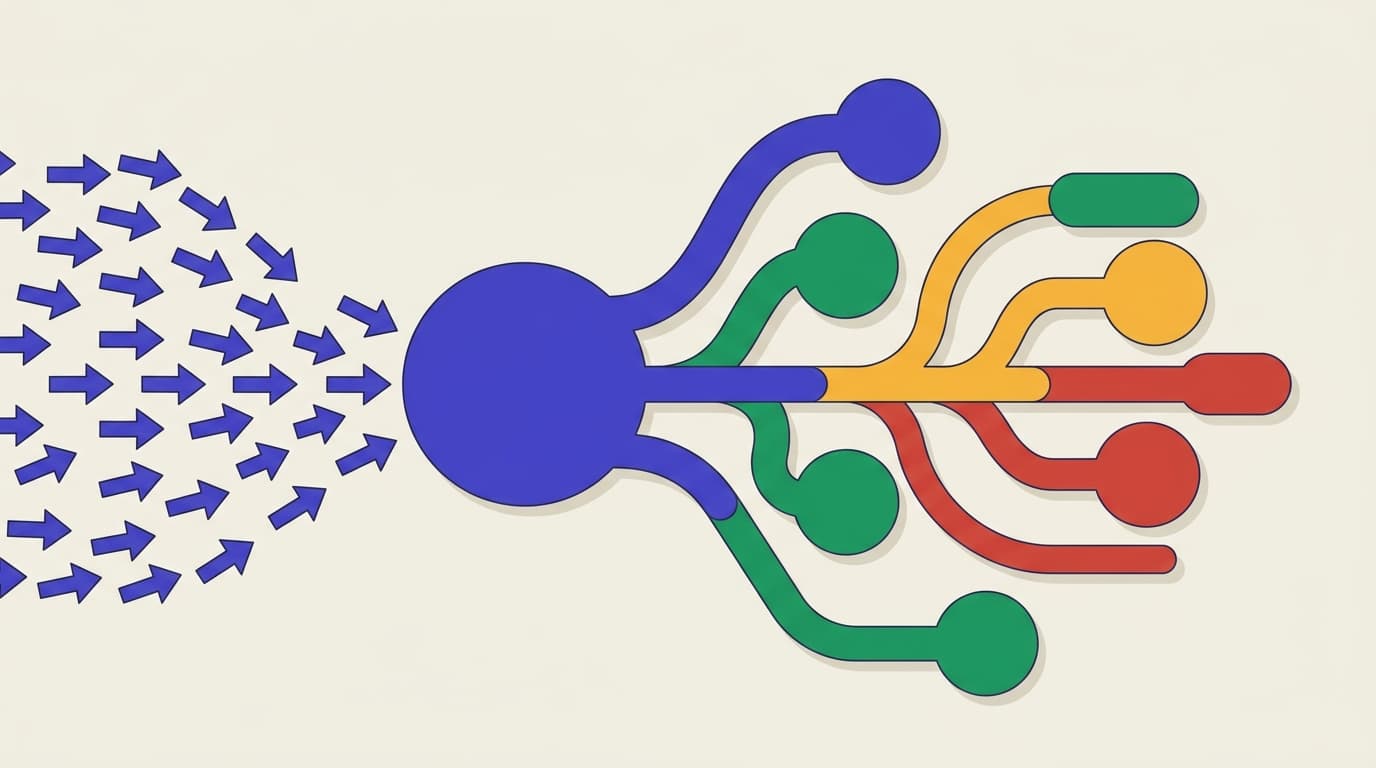
Belgian social security rests on three schemes, depending on whether you are an employee, self-employed or a civil servant, and on seven branches, each with its own paying body. The ONSS collects contributions, Global Management distributes them. Part of the whole has not been federal since 2015.
The word is singular, the thing is not. When an employee in Charleroi, a self-employed woman in Ghent and a federal civil servant all say they pay into social security, they are talking about three different sets of rules, with different branches, different rates and different funds. The architecture dates back to the decree-law of 28 December 1944, and the right to social security has sat in article 23 of the Constitution since 1994.
The seven branches and the body that pays each one
The federal social security portal counts seven: retirement and survivor pensions, unemployment, occupational accidents, occupational diseases, child benefits, compulsory healthcare and sickness insurance, and annual holidays.
Each branch has its own institution, and that institution is the one you face on the day a right opens. The table below sets the seven branches against their body and what they cost in 2025, according to the 2025 annual report of the ONSS.
| Branch | Competent body | Level of government | Financing in 2025 |
|---|---|---|---|
| Retirement and survivor pensions | Federal Pensions Service (SFP) | federal | 42.0 billion euros |
| Healthcare | INAMI, paid out by the mutualités, the health insurance funds | federal | 34.8 per cent of Global Management needs |
| Sickness, invalidity and maternity benefits | INAMI | federal | 14.6 per cent of needs |
| Unemployment, time credit, career breaks | ONEM | federal | 6.8 billion euros |
| Occupational accidents | Fedris | federal | 355 million euros |
| Occupational diseases | Fedris | federal | 259 million euros |
| Annual holidays of blue-collar workers | ONVA and special holiday funds | federal | about 5.9 billion, outside Global Management |
| Child benefits | regional agencies | Regions and German-speaking Community | outside Global Management since 2015 |
One detail almost nobody knows, taken from the same source: holiday pay for blue-collar workers in the private sector goes through the ONVA and the special funds, while that of white-collar staff and civil servants is paid directly by the employer. Same right, two circuits.
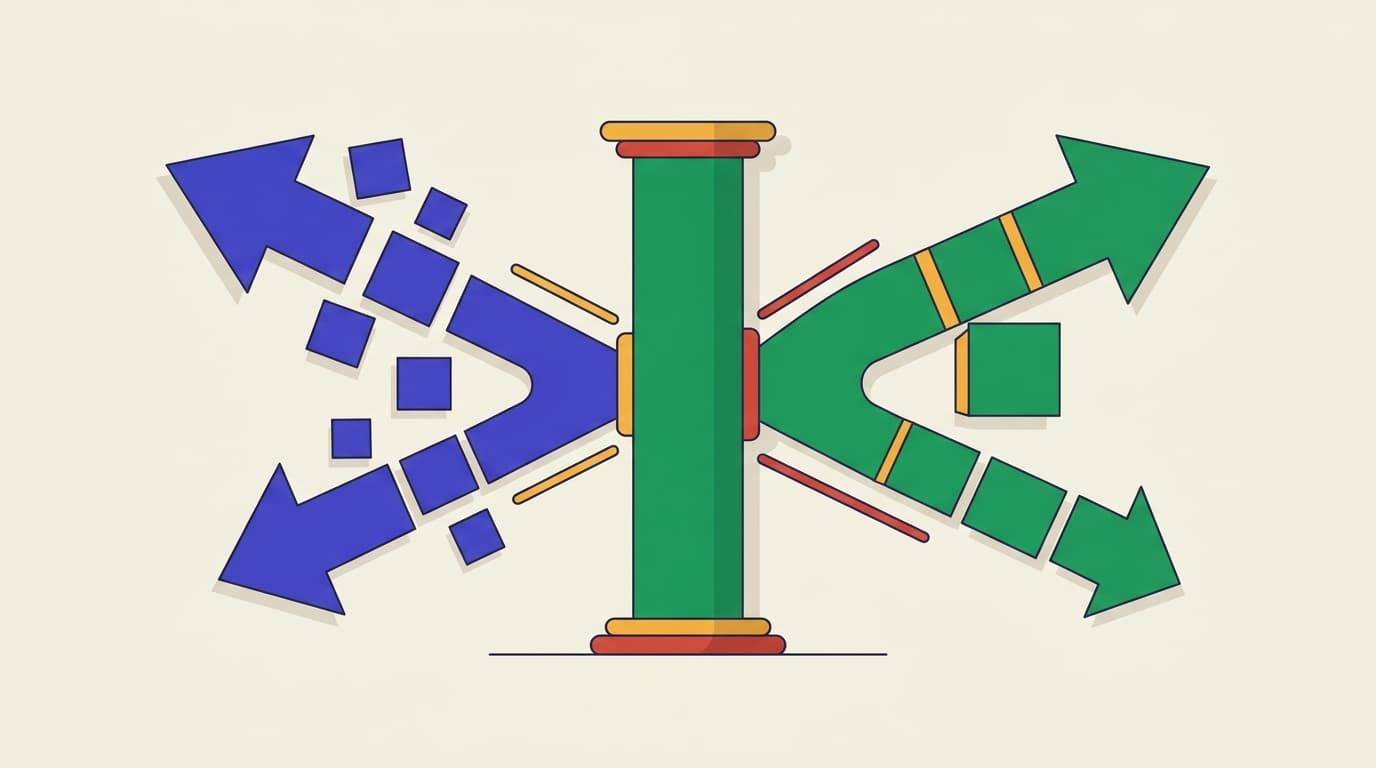
Employee, self-employed, civil servant: three separate schemes
Socio-economic status decides the scheme, and the scheme decides the cover.
An employee is insured for all seven branches. A self-employed person is covered neither for unemployment, nor for occupational accidents, nor for occupational diseases, but holds rights of their own: the droit passerelle, a bridging right, plus maternity support, a carer's allowance and a bereavement allowance. The federal civil servant falls under a separate status, and their own administration pays most of their benefits.
Where does your 13.07 % contribution go?
Nowhere in particular, and that is the very principle of the system. Since 1 January 1995 the ONSS pools the money and finances the branches according to their cash needs, not according to fixed percentages set in advance. No euro is labelled at the outset.
The calculation can still be run backwards, from the actual split of financed needs in 2025. Take a gross salary of 3,000 euros a month. The personal contribution of 13.07 per cent comes to 392.10 euros. Applied to that sum, the split observed last year gives the following breakdown.
- Pensions, 43.06 per cent of needs: 168.84 euros
- Healthcare, 34.77 per cent: 136.34 euros
- Sickness and invalidity benefits, 14.59 per cent: 57.21 euros
- Unemployment, 5.77 per cent: 22.62 euros
- Other branches, 1.81 per cent: 7.10 euros
The exercise is an illustration, not an official allocation. It does show one verifiable thing: pensions and healthcare together absorb more than three quarters of what Global Management finances, and unemployment a twentieth of it.
Set against the population, the order of magnitude becomes more concrete still. The 97.6 billion euros financed in 2025, divided by the 11,825,551 inhabitants counted by Statbel on 1 January 2025, come to roughly 8,254 euros per inhabitant per year. Of which 4,074 euros for INAMI, 3,555 euros for pensions, 573 euros for unemployment, 30 euros for occupational accidents and 22 euros for occupational diseases.
Who manages the money?
Until 1994 each institution collected the proceeds of its own sectoral contribution and lived off its own income. A branch in surplus kept the surplus, a branch in deficit waited for an intervention.
Global Financial Management ended that compartmentalisation on 1 January 1995. The ONSS now gathers contributions, state subsidies and alternative financing into a common pot, then distributes them according to the real needs of each sector. Steering falls to the Social Security Management Committee, made up in equal parts of employer organisations and trade unions, which reports several times a year to the federal government on how income and spending are moving. Two reserve funds complete the set-up: the Reserve Fund, built between 1995 and 2001 and worth 4.7 billion euros in 2025, and the Fund for the Future of Healthcare, at 1.3 billion.
Where does the money come from, if not from contributions?
From contributions for two thirds only. The remaining third comes from public intervention: state subsidies, alternative financing drawn from VAT, excise duties and other tax receipts, and a contribution from the federated entities towards devolved contribution reductions.
| Global Management income | 2023 | 2024 | 2025 |
|---|---|---|---|
| Social security contributions | 58.2 billion | 61.1 billion | 63.4 billion |
| Specific contributions | 3.9 billion | 4.0 billion | 4.1 billion |
| Public transfers | 29.5 billion | 32.4 billion | 33.7 billion |
| Total | 91.5 billion | 97.5 billion | 101.2 billion |
| Share of transfers in the total | 32.2 per cent | 33.2 per cent | 33.3 per cent |
The last line is a calculation redone from the published amounts. It moves little from one year to the next, but it pins down a fact that budget discussions often assume is known: one euro in three of workers' social security no longer comes from work. The shift is an old one and is set out plainly by the federal portal, which explains that employer contributions were cut sharply from the end of the twentieth century and partly replaced by other resources. Since the law of 18 April 2017, Global Management receives an annual base grant of 2.6 billion euros, topped up by a balancing grant.
Three areas have left the federal level
The sixth state reform moved several parts of social protection to the federated entities. Child benefits are the most visible case: Global Management has not financed them since 2015, and Flanders, Wallonia and the German-speaking Community took over management in 2019, the Brussels-Capital Region in 2020. The connecting factor is the child's legal residence, not the parent's place of work.
Two other areas followed the same path: the allowance for assistance to the elderly and the financing of care homes. They now fall to AViQ in Wallonia, Iriscare in Brussels, and Flemish social protection in the north of the country.
In other words, your point of contact changes with the subject and with where you live. For a pension or a reimbursed medicine, the counterpart is federal. For a child benefit or support tied to old age, it is regional.
Is Belgian social security still a single system?
Largely yes, and the figures say it better than words do. Of the 97.6 billion euros financed in 2025, almost all still passes through federal institutions, and the two biggest items, pensions and healthcare, have not shifted an inch towards the Regions.
One objection does keep coming back in the debate. Devolution did not touch the most expensive part, but the most visible one: the allowance a family receives every month, the support that comes with old age, a parent's care home. A household meets the system through what it receives rather than through what it costs, and on that ground the number of counterparts has grown since 2019.
The nuance lies in the financing. Interpersonal solidarity, the kind that has a contributor in Liège pay for a pensioner in Ostend without anyone keeping score, is still organised federally, through a mechanism, Global Management, designed precisely to erase the borders between branches. Should the country go further one way or the other? That is a political question, and it divides Belgian parties durably. This site does not settle it.
Five common confusions about Belgian social security
The vocabulary of the field is French, the rules are not, and the mix always produces the same mistakes.
- Social security confused with health insurance. Healthcare is one branch out of seven, and pensions weigh more heavily than it does.
- The mutualité taken for the insurer. Compulsory insurance is organised by INAMI; the mutualité is the paying body you are affiliated to, with the CAAMI as the public auxiliary fund.
- A social security number looked for as in France. In Belgium it is the NISS, which normally coincides with the national register number.
- Social assistance filed under social security. The integration income, the GRAPA old-age income guarantee and disability allowances belong to a separate residual safety net, non-contributory.
- One contribution rate applied to every status. The 13.07 per cent concerns employees; a self-employed person pays quarterly contributions calculated on professional income, a civil servant specific rates.
This account describes a system, never a preference. On the programmes themselves, the comparator sets two parties side by side, the ranking sums up positions theme by theme, and the methodology recalls that the scores published here describe a position on an axis, never a league table of merit. The other articles in the health and care section set out the proposals on the table.
Sources: federal social security portal, Social security in Belgium (three schemes, seven branches, bodies by scheme, residual social assistance) and Financing of social security (global financial management since 1 January 1995, alternative financing, rates applying to civil servants); FPS Social Security, the branches of social security (devolution of child benefits, own rights of the self-employed, annual holiday scheme); ONSS, 2025 annual report, financing of social security institutions (income and financed needs 2023 to 2025, 2025 split, base grant under the law of 18 April 2017, reserve funds); Statbel, population on 1 January 2025; decree-law of 28 December 1944 on the social security of workers; article 23 of the Belgian Constitution; special law of 6 January 2014 on the sixth state reform. The per-inhabitant amounts and the share of transfers in income are calculations redone from the published figures.
Santé & Soins comparator
Compare the parties' positions on santé & soins.
Compare now →
Frequently asked questions
Camille est politologue, diplômée en sciences politiques de l'UCLouvain. Elle a suivi trois campagnes électorales belges comme analyste et décortique depuis dix ans les programmes des partis, vote par vote. Sur Meilleur Parti Politique, elle traduit le jargon politique en comparaisons concrètes — sans jamais dire pour qui voter.