
What do Belgian parties propose on institutions in 2026?
In 2026, Belgian parties fall into two families on the institutional question. On one side, the N-VA and the Vlaams Belang want to transfer more power to the federated entities: confederalism for the former, Flemish independence for the latter. On the other, the PTB·PVDA, the PS, Ecolo and Groen want to strengthen the federal level, or even return competences to it. In between, the centrist Flemish parties and the French-speaking parties look for adjustments without rupture.
This dividing line does not pit a "good" project against a "bad" one. It pits two answers to the same question: at what level are public decisions best taken? The first brings power closer to the regional ground. The second bets on a stronger, more solidarity-based federal centre. Both camps say they want a state that works; they simply pull on a different lever.
On the facts, the frame is set by the Arizona government agreement, in office since February 2025. That agreement tasks Prime Minister Bart De Wever with preparing a state reform touching the distribution of competences, financing and the institutions, with abolishing the Senate as the first visible project. It is this timetable that structures the year's debate.
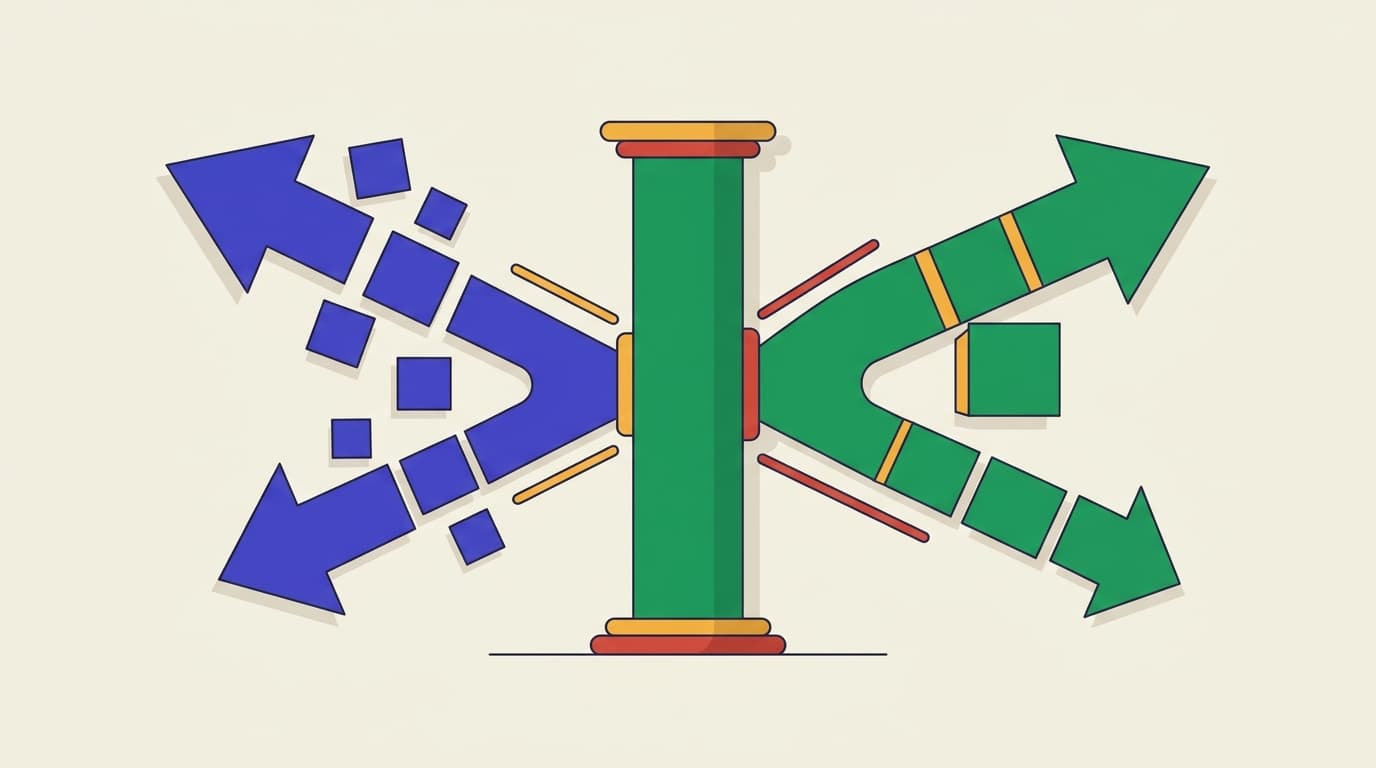
How to read these positions without taking sides?
Each party gets a sign per lever here: a green + when it clearly defends that approach, an amber ~ for an intermediate or conditional stance, a red − when it opposes it. This system replaces stars or scores out of five, which would suggest a moral ranking.
The key point: no column designates a "good" party. A party marked with a + on regional autonomy is most often marked with a − on strengthening the federal level, and vice versa. The two levers answer different priorities, defended by different voters. Reading the table means spotting the lever each party favours, not handing out a prize for virtue.
For example, the N-VA gets a + on autonomy for the federated entities and a − on strengthening the federal level, which it deems inefficient. The PTB·PVDA has the opposite profile. Neither is "in the lead": they are not playing on the same field.
| Party | More autonomy for federated entities | Strengthen / re-federalise the federal level |
|---|---|---|
| PTB·PVDA | − | + |
| PS | − | + |
| Ecolo | − | + |
| Groen | − | + |
| Vooruit | ~ | ~ |
| Les Engagés | ~ | ~ |
| MR | ~ | ~ |
| Open VLD | ~ | ~ |
| CD&V | + | ~ |
| N-VA | + | − |
| Vlaams Belang | + | − |
What is the confederalism defended by the N-VA?
Confederalism is a model in which the federated entities hold most of the power and put in common only what they decide to keep together. It is the reverse of the current logic, where the federal level holds competences by default and delegates some to the Regions and Communities.
In the N-VA's statutes, the long-term goal remains an "independent republic of Flanders". The party considers that step unrealistic in the short term and has, for about a decade, defended confederalism as a workable path: each entity would run its own policy, with its own financial means, then coordinate on what it still wants to do at the common level. Bart De Wever, now Prime Minister, embodies this line.
Concretely, its supporters argue that bringing decisions closer to the regional ground improves efficiency and responsibility: each entity manages and owns its budget. Its opponents reply that such a model weakens national social security and solidarity between Regions, and further complicates a country already known for its tangle of layers of power. It is precisely this point of solidarity that crystallises the French-speaking opposition.
Why do French-speaking parties reject confederalism?
French-speaking parties reject confederalism because they see it as a step toward dismantling Belgium and weakening interregional solidarity. On this point the PS, the MR, Ecolo and Les Engagés converge, despite their differences elsewhere.
The Arizona government agreement reflects this deadlock: it carefully avoids the word "confederalism" and speaks of creating a framework allowing each entity to take on more responsibility, with solidarity maintained. Yet the N-VA's group leader in the Chamber publicly recalled that confederalism remained his party's priority, while French-speaking leaders rule out the confederal option on which the Flemish nationalists built their campaign.
The French-speaking argument is twofold: federal social security protects all citizens, and splitting further would be costly without a guarantee of efficiency. Their opponents reply that solidarity can exist between autonomous entities, and that a "combative" federalism, where every reform is negotiated painfully, serves no one. The debate remains open and has no purely technical answer.
What does the state reform prepared by the Arizona government change?
The reform prepared by the De Wever government covers three announced projects: the distribution of competences between levels of power, financing rules, and the architecture of the institutions. Its first symbol is abolishing the Senate, written into the government agreement, ahead of the 2029 elections.
The process cleared a first step on 30 March 2026, when the Institutional Affairs Committee adopted a vote on revising Article 195 of the Constitution, the article framing the revision procedure itself. Abolishing the Senate would make Belgium a single-chamber state for the first time in its history. Bart De Wever indicated the operation would require "eight votes" in total, seven of which remained after this first green light.
The obstacle is arithmetic: a constitutional revision requires a two-thirds majority, which the Arizona coalition alone does not reach. It therefore needs opposition votes, starting with the PS, which conditions its support on writing the right to abortion into the Constitution. Within the majority itself, the MR and Les Engagés set their own conditions, such as guaranteed representation of German-speakers in a future federal assembly. Supporters present abolishing the Senate as a common-sense simplification; critics see a side project as long as the real division of competences is not settled.
What do the parties that want to strengthen the federal level propose?
Left-wing parties want to consolidate the federal level, or even return competences that are currently regionalised. The PTB·PVDA is the only truly national party: it runs both in Flanders and on the French-speaking side, calls itself Belgicist, and argues for a "federalism of cooperation" instead of a "federalism of combat", with re-federalisation of competences, notably in healthcare.
The PS defends a more nuanced line: it wants the Regions to fully exercise their competences, reaffirms French-speaking solidarity within the Wallonia-Brussels Federation, and supports strengthening the federal level through targeted re-federalisations and a federal electoral constituency, which would let voters on both sides of the language border vote for the same lists. Ecolo and Groen share the idea of a cooperative federalism and of competences brought back to the federal level where it makes sense, for instance on climate or mobility.
The underlying argument is one of clarity and solidarity: less fragmentation, coherent policies at the scale of the country. The criticism, voiced by the autonomist Flemish parties, is that a stronger central power moves decisions away from local realities and reignites the community tensions these reforms claim to soothe. Neither camp holds definitive proof: it all depends on the competences concerned.
What does the MR's "French-speaking federation" mean?
The "French-speaking federation" is an idea pushed by Georges-Louis Bouchez (MR) since June 2026: gradually bringing the Walloon and Brussels French-speaking executives closer, through reinforced coordination or a cooperation agreement, without abolishing existing institutions. Bouchez calls a Belgium organised into four Regions "completely ridiculous" and defends a French-speaking logic uniting the Walloon Region, the Brussels Region and the Wallonia-Brussels Federation.
His target is not Flemish confederalism but the internal organisation of the French-speaking camp. The argument advanced is economic and institutional: better coordinate Wallonia and Brussels, notably on employment, training and education, and lift the Wallonia-Brussels Federation out of its budget difficulties. It is a reorganisation, not a demand for extra autonomy from the federal level nor a re-federalisation — hence the MR's ~ on both levers in the table.
Reactions are mixed. DéFI, historically attached to a strong French-speaking federalism, says it is close to the idea. The PS and Les Engagés remain more cautious, each with its own reading of institutional reform on the French-speaking side. The debate illustrates an often-forgotten point: the institutional question is not played out only between Flemings and French-speakers, but also within each community.
Where do the Vlaams Belang and the centrist Flemish parties stand?
The Vlaams Belang holds the sharpest position: it is the only party to defend Flemish independence unambiguously, with a detailed roadmap in its programme. It therefore gets a clear + on autonomy and a − on strengthening the federal level, which it ultimately wants to dissolve. Its logic is as much identity-based as institutional.
The centrist Flemish parties — CD&V, Open VLD and, in the majority, Vooruit — sit between the two poles. The CD&V supports a new state reform with more homogeneous packages of competences and more regional autonomy, but within the Belgian framework: it leans toward the + on autonomy without joining confederalism. The Open VLD, more Belgicist among the Flemish parties, stresses efficiency and stays cautious on major structural reforms. Vooruit, a Flemish socialist party and member of Arizona, prioritises a state that works over the question of the level of power, hence its double nuance.
These positions are a reminder that a simple "for or against Belgium" axis is not enough. Two Flemish parties can want more regional autonomy for opposite reasons — managerial pragmatism on one side, a Flemish national project on the other — and diverge on almost everything else.
State reform: what do the recent votes say?
Beyond the programmes, the 2026 votes confirm the dividing line. The committee vote of 30 March 2026 on revising Article 195 launched the procedure to abolish the Senate, but the requirement of a two-thirds majority forces the Arizona coalition to seek votes beyond its own ranks. This is where the conditions of the PS, the MR and Les Engagés weigh: without agreement on abortion, German-speaker representation and the rest, the project can stall.
Comparing promises with actions is the best antidote to electoral marketing. A party can say it wants to "simplify the state" while defending opposite simplifications: abolishing the Senate, re-federalising healthcare or transferring more to the Regions do not lead to the same country. It is the texts voted and the government agreement that reveal the lever actually pulled.
To dig deeper, the comparator lets you place two parties side by side on institutions, the ranking sums up positions theme by theme, and the quiz starts from your priorities rather than a programme. The methodology details how these positions are collected and remains open to challenge.
What this comparison does not settle
This table does not say which model "works" best: the real effect of confederalism, a re-federalisation or a French-speaking federation depends on the competences concerned, the financing chosen and political balances that go beyond institutional architecture alone. Nor does it capture what matters to you — the proximity of decisions, solidarity between Regions, the simplicity of the system — which often weighs more than a theoretical scheme.
The right reflex, then, is not to pick a winning camp, but to link each position to the lever it pulls, then to compare this overview with what you, personally, expect from the way the country is organised.
Institutions comparator
Compare the parties' positions on institutions.
Compare now →
Frequently asked questions
Camille est politologue, diplômée en sciences politiques de l'UCLouvain. Elle a suivi trois campagnes électorales belges comme analyste et décortique depuis dix ans les programmes des partis, vote par vote. Sur Meilleur Parti Politique, elle traduit le jargon politique en comparaisons concrètes — sans jamais dire pour qui voter.