What do Belgium's parties propose against drug trafficking in 2026?
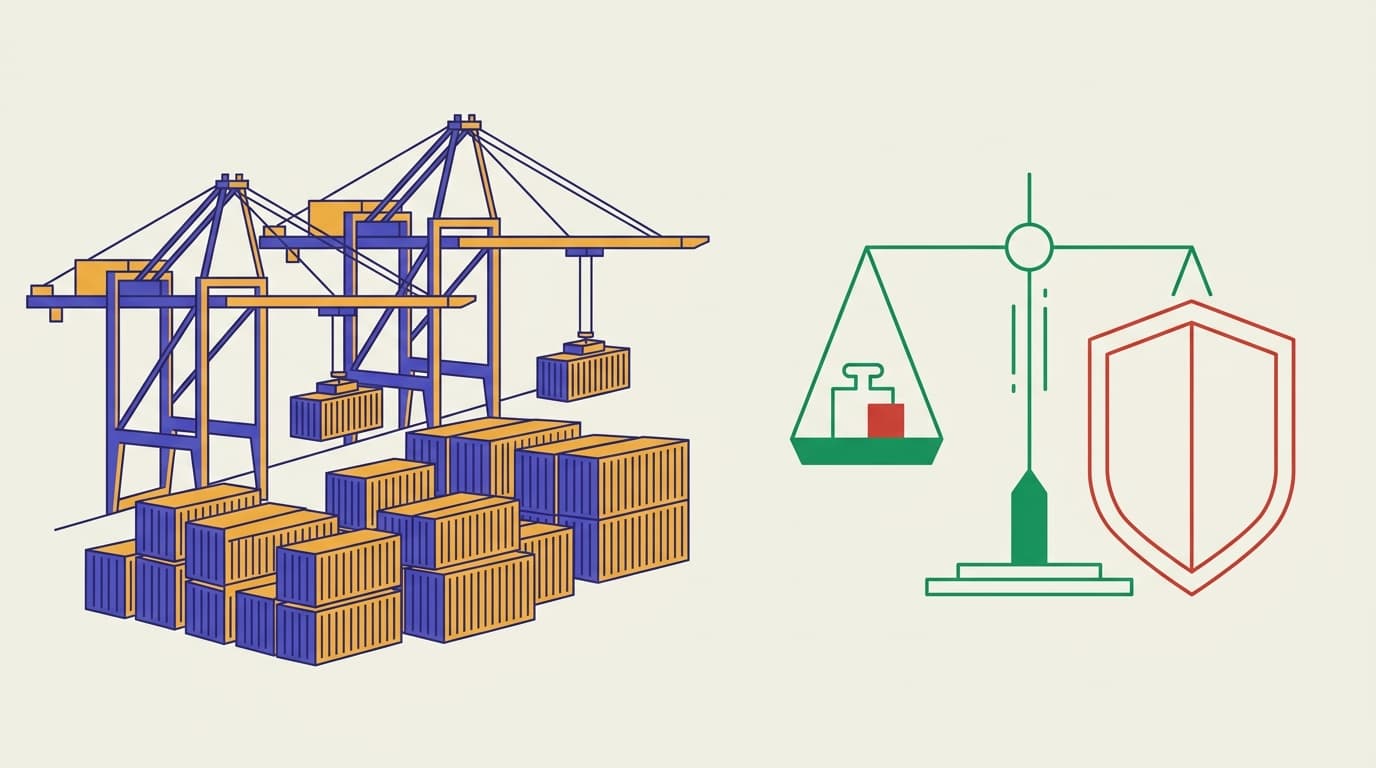
In 2026, Belgium's ten main parties start from the same diagnosis — the country is a European hub for cocaine — and pull two different levers. The N-VA, Vlaams Belang, MR, CD&V and Vooruit bet on the criminal response: heavier sentences, tighter port controls, sanctions on hard-drug users. Ecolo, Groen, the PS, Open VLD and Les Engagés bet on regulation and care: a legal framework for cannabis, harm reduction, health-based treatment. The PTB·PVDA holds a position of its own, very aggressive on organised crime and financial flows, more cautious on legalisation.
The disagreement is not about how serious the problem is. It is about where to act: on supply, by making trafficking costlier and riskier, or on demand, by pulling part of the user base out of the black market. One camp wants to close the gateway; the other wants to reduce what makes it profitable. Both say they want less drug-related violence; they simply aim at different points of the chain.
By the numbers, the trend helps no one settle it. Customs seized around 55 tonnes of cocaine in Antwerp in 2025, against 44 tonnes in 2024, after a record of just over 120 tonnes in 2023, according to the annual figures published by the federal police and the customs data reported by VRT NWS in January 2026. Rising seizures can mean more effective controls or a more abundant market. Each camp reads its own proof into them.

Where does drug trafficking stand in Belgium in 2026?
The Port of Antwerp-Bruges remains the main gateway for South American cocaine into Europe, and the traffic no longer stops at the quayside. In 2025, the Antwerp federal judicial police opened 160 files linked to maritime trafficking, the shipping police made over 200 arrests in the port area, and the courts handed down 242 convictions in port import cases.
What has changed in ten years is that the file left the purely policing sphere. Repeated shootings in Antwerp and Brussels, threats against magistrates and the corruption of port staff brought the phrase narco-state into Belgian public debate — a term judicial officials themselves use conditionally, as a risk to avoid rather than a statement of fact. More than 300 Port of Antwerp employees had their access suspended after background checks were tightened.
In practice, the state responded with coordination before it responded with legislation. The post of national drugs commissioner was created in 2023, and Ine Van Wymersch, formerly public prosecutor of Halle-Vilvoorde, was appointed in February 2023 for five years, with a cross-cutting Justice–Home Affairs–Health–Finance mandate. She notably pushed the idea of a drugs fund financed by assets confiscated from traffickers and split between enforcement and public health. In February 2026, the Brussels government agreement created a regional drugs commissioner on the same model, plus ten million euros for station security. One last figure complicates the picture: marijuana seizures in Antwerp went from under 5 tonnes in 2024 to over 20 tonnes in 2025, a sign that the market is not only about cocaine.
How do you read these positions without taking sides?
Each party gets a sign per lever here: a green + when it clearly backs that approach, an amber ~ for an intermediate or conditional position, a red − when it opposes it. This system replaces stars or marks out of 5, which would suggest a moral ranking.
No column designates a good party. A party marked with a + on the criminal response is almost always marked with a − on regulation, and vice versa. The two levers answer different priorities — neighbourhood safety and the authority of the law for one, users' health and draining the black market for the other — backed by different voters.
For example, the N-VA gets a + on toughening and a − on regulation, which it sees as a signal of surrender. Ecolo has the opposite profile. Neither is in the lead: they do not measure success with the same instrument, one counting seizures and convictions, the other overdoses avoided and users taken into care.
| Party | Toughen the criminal response | Regulate the market and treat users |
|---|---|---|
| N-VA | + | − |
| Vlaams Belang | + | − |
| MR | + | − |
| CD&V | + | − |
| Vooruit | + | − |
| Les Engagés | ~ | + |
| Open VLD | ~ | + |
| PS | ~ | + |
| PTB·PVDA | − | ~ |
| Ecolo | − | + |
| Groen | − | + |
What do the parties wanting a tougher criminal response propose?
Centre-right and right-wing parties want first to make trafficking riskier and less profitable. The Arizona government agreement 2025-2030, signed by the N-VA, MR, Les Engagés, Vooruit and CD&V, makes narcotics a priority and explicitly uses the phrase war on drugs. What the agreement says: more resources to secure ports and airports, targeting of financial flows and money laundering, heavier sentences for trafficking, and a prison building plan to absorb the expected convictions.
This camp's second axis targets the consumer. The MR calls for tougher sanctions on all hard-drug users, on the grounds that demand directly funds the networks. The N-VA, CD&V and Vlaams Belang explicitly oppose any form of decriminalisation, including for cannabis: for them, any softening of the legal framework sends a signal of tolerance that makes police work harder. Vooruit, a Flemish socialist party, parts ways with its French-speaking political family on this precise point by siding with the opponents of legalisation.
The core argument is deterrence and the protection of exposed neighbourhoods. Trafficking does not stop at the quay: it is settled by shootings in inhabited streets, and a state that retreats on punishment leaves that ground to others. In concrete terms, the record seizures of 2023 and the 242 convictions of 2025 are presented as proof that sustained pressure delivers results. The criticism, voiced by the left and part of the research community, is that fifty years of repressive policies have made no drug market disappear in Europe, that rising seizures can equally signal a growing market, and that punishing users fills prisons — already over 120% occupancy — without reducing demand.
What do the parties wanting regulation and care propose?
Left-wing parties, the greens and part of the liberals want to take away the black market's broadest customer base. The PS holds that cannabis should be legalised and its distribution organised under supervision, on the model of Quebec and several US states; Pierre-Yves Dermagne (PS) argued as early as 2023 for getting out of hypocrisy. Ecolo and Groen back a public-health approach based on harm reduction, and carried the Brussels legal framework for drug consumption rooms. The Open VLD and Les Engagés also placed themselves, in the 2024 electoral test, among the parties favourable to some form of legalisation.
The PTB·PVDA holds a position apart, hence its ~ on this lever. It does not speak of legalisation but of regulation: revising the 1921 drugs act to frame cannabis, while keeping a clear distinction between hard and soft drugs. On the criminal side, it focuses its message on organised crime, financial flows and money laundering rather than on users, whom it does not want punished further.
The core argument is twofold: a legal framework takes a share of turnover and violence away from trafficking, and a user in care costs less than a user in prison. By the numbers, Belgium now has two drug consumption rooms — Säfti in Liège, opened in 2018, and Gate in Brussels City, opened in May 2022 —, with two projects announced in Molenbeek and Charleroi; the European Union Drugs Agency lists around a hundred comparable facilities in Europe and documents their effects on overdoses and discarded needles. The criticism, voiced by the right, is that regulating cannabis does not touch the core of the Belgian problem: cocaine, illegal everywhere, whose trafficking would not depend on the status of cannabis. On top of that comes an objection of method — the narcotics act is federal, while consumption rooms fall to the Regions and municipalities, which produces an uncomfortable legal setting for frontline workers.
Does cannabis legalisation change anything about drug trafficking?
Not directly for cocaine, but possibly for the overall size of the illegal market. That is the most honest answer the available data allows, and it is also what makes the debate so persistent: both camps are right about half of the problem.
For supporters of regulation, the argument is arithmetic. Cannabis remains the most consumed illicit substance in Europe; taking that segment out of the black market deprives networks of part of their cash flow and their street recruitment. The 2025 Antwerp figure gives them something concrete: over 20 tonnes of marijuana seized, against under 5 tonnes in 2024. That market is not marginal.
For opponents, the objection is just as factual. The networks making headlines in Antwerp and Brussels live off cocaine, whose status would not change one bit with cannabis legalisation. The Netherlands, often cited as a benchmark of tolerance, also faces organised crime of a comparable level — which suggests a softer cannabis framework does not protect against violent trafficking. Conversely, its defenders point out that the Netherlands never legalised production, only tolerated sale, which leaves the whole upstream chain in the networks' hands. This disagreement about what the Dutch case actually proves sums up the state of the Belgian debate rather well.
Where do Vooruit, Les Engagés and the PTB·PVDA stand?
These three parties blur the left-right axis. Vooruit, a Flemish socialist party, sits in the Arizona coalition and signed an agreement that speaks of a war on drugs; it is also opposed to cannabis legalisation, unlike the French-speaking PS to which it is ideologically closest. Hence its + on the criminal side and its − on regulation: on this particular file, the language border counts for more than the political family.
Les Engagés travel the opposite way. Members of the federal majority, they own its security package — hence their ~ — but in the 2024 electoral test placed themselves among the parties favourable to regulated cannabis legalisation, which earns them a + on regulation. It is one of the few visible internal dissonances within the Arizona coalition on this subject.
The PTB·PVDA rejects both labels. It opposes heavier sanctions on users, which earns it a −, but does not call for legalisation in the sense the PS means: it speaks of regulation, keeping the hard/soft drug distinction, hence its ~. Its target lies elsewhere — financial flows, money laundering, port corruption —, ground on which it objectively meets the N-VA while opposing it on everything else. To dig further, the comparator puts two parties side by side on justice, the ranking sums up positions theme by theme, and the quiz starts from your priorities rather than a manifesto. Our article on prison overcrowding shows what tougher sentencing produces downstream, and the methodology details how these positions are gathered.
What this comparison does not settle
This table does not say which lever works. The real effect of a heavier sentence or of a legal framework depends on financial investigation resources, cooperation with departure and transit countries, the availability of treatment places, whether a terminal has a scanner or not — and on decisions taken in Rotterdam, Algeciras or Guayaquil, over which no Belgian party has any hold. Nor does it factor in your experience — neighbour of a dealing spot, health professional, port worker, relative of a user — which often weighs more than a national average.
So the right reflex is not to remember a winning camp, but to link each position to the lever it pulls: supply or demand. Then to test this overview against what you expect from a drug policy.
Sécurité & Justice comparator
Compare the parties' positions on sécurité & justice.
Compare now →
Frequently asked questions
Camille est politologue, diplômée en sciences politiques de l'UCLouvain. Elle a suivi trois campagnes électorales belges comme analyste et décortique depuis dix ans les programmes des partis, vote par vote. Sur Meilleur Parti Politique, elle traduit le jargon politique en comparaisons concrètes — sans jamais dire pour qui voter.