
The Belgian Senate has sixty members, all appointed, none directly elected. The Chamber has one hundred and fifty, all elected. Together they form the federal parliament, but they do not carry the same weight.
Senate and Chamber: who does what at a glance
The Constitution sets out three legislative procedures. The first gives everything to the Chamber, the second shares power on an equal footing, the third leaves the Senate a say without a veto.
| Matter | Procedure | Article | Who has the last word |
|---|---|---|---|
| Most ordinary laws | One assembly | 74 | The Chamber |
| Confidence in the government | Chamber alone | Constitutional practice, Art. 96 | The Chamber |
| State budget and accounts | Chamber alone | 74 | The Chamber |
| Naturalisations | Chamber alone | 74 | The Chamber |
| Constitutional revision | Both on an equal footing | 77 | Neither alone: same text required |
| Special-majority laws | Both on an equal footing | 77 | Neither alone: same text required |
| Party financing | Both on an equal footing | 77 | Neither alone: same text required |
| Council of State, State structure outside Art. 77 | Optional bicameral | 78 | The Chamber, after any Senate input |
Source: Chamber of Representatives information sheets, Articles 74, 77 and 78 of the Constitution.
How has the Senate been composed since 2014?
By appointment, in two steps. Article 67 of the Constitution states that the Senate is made up of sixty senators. Fifty come from the federated entities: 29 from the Flemish Parliament, 10 from the French Community Parliament, 8 from the Walloon Parliament, 2 from the French language group of the Brussels Parliament and 1 from the German-speaking Community Parliament. Those fifty then appoint ten co-opted colleagues, six Dutch-speaking and four French-speaking, according to the results of the Chamber election.
The language groups are easy to count. The Dutch-language group has 35 senators (29 + 6), the French-language group 24 (20 + 4), and the German-speaking senator belongs to neither group. Out of sixty seats, that is about 58%, 40% and 2%. These proportions come from the seat distribution set in the Constitution, not from a Senate election, and the Senate's information brochure describes them in detail.
A gender rule applies as well: at most two thirds of senators may be of the same sex.
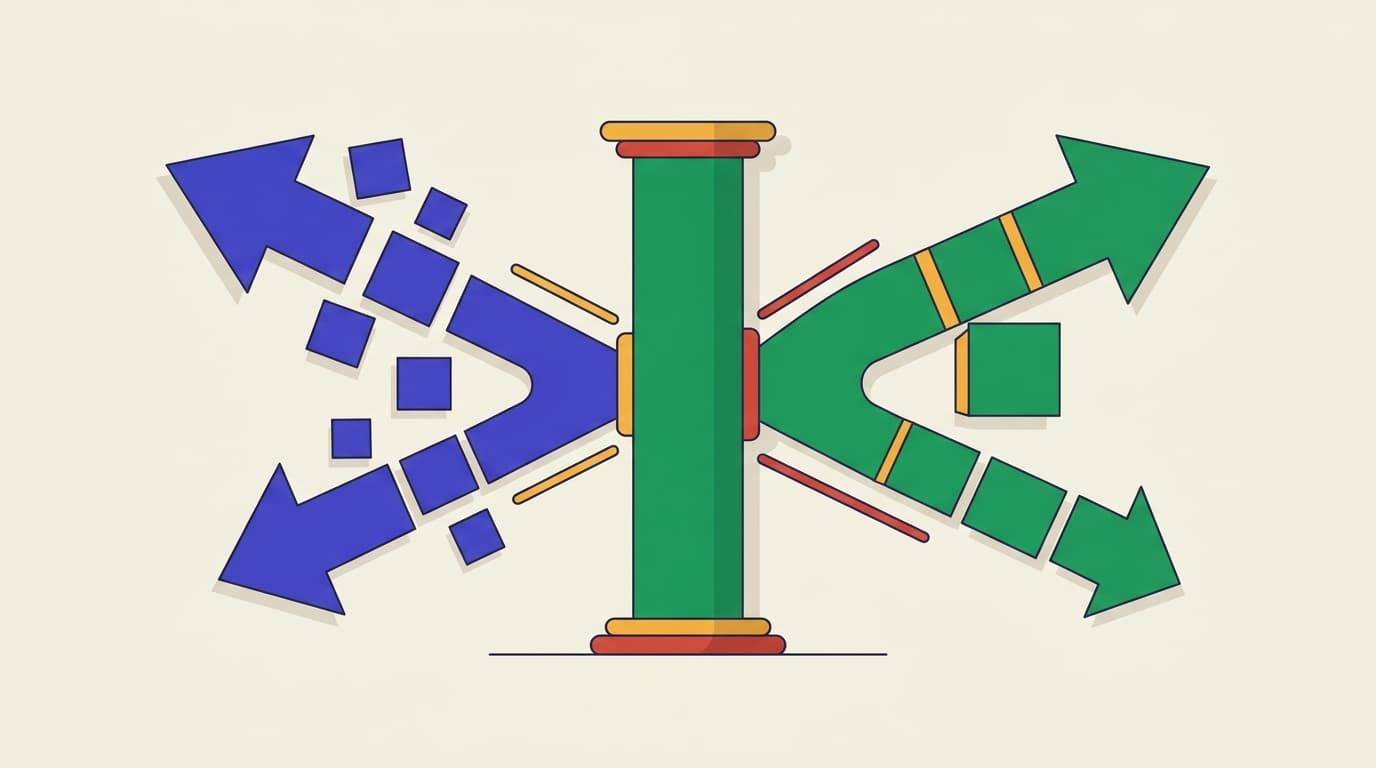
Why is no senator directly elected any more?
Because the sixth state reform changed the nature of the Senate. Since the elections of 25 May 2014, the composition described above has replaced the old one: from 1993 to 2014 the Senate had 71 members, 40 of them directly elected by citizens, 21 community senators and 10 co-opted.
The Senate has become an assembly of the federated entities rather than a second popular chamber. According to its own brochure, its appointed members let the entities talk to each other and to the federal authority. Its information reports deal, for example, with gender equality or child poverty, matters where several levels of government overlap.
Whether this architecture is the right one is a political debate that this article does not settle.
On which matters does the Senate vote as an equal of the Chamber?
The list in Article 77 is short and goes to the foundations of the system. Both assemblies must adopt the same text, otherwise it falls.
- constitutional revision;
- special-majority laws, those that set the powers of the Regions and Communities;
- the institutions and financing of the German-speaking Community;
- the financing of political parties and the control of election spending;
- the organisation of the Senate and the status of its members.
The sixth state reform itself went this way: the special law of 6 January 2014 had to be adopted by both assemblies. To see who then exercises the powers divided in this way, the article on Regions and Communities gives the detail.
What can the Senate do on Article 78 laws?
Take up the text, and amend it. The Chamber votes the bill first, then sends it to the Senate. The Senate has 15 days to decide whether to take it up, then 30 days to examine it, a period the concertation committee can extend. If it amends, the text goes back to the Chamber, which decides.
The matters concerned: laws implementing special-majority laws, the organisation of the State outside Article 77, the Council of State and federal administrative courts, and laws ensuring compliance with international or supranational obligations.
When the two assemblies disagree on which procedure applies, the concertation committee decides. It has 22 members, eleven per assembly, presidents included, and its decisions bind both chambers. The Council of State may also be consulted.
What does the Chamber decide alone?
The power to bring down a government, first. The federal government asks the Chamber for confidence when it is installed, and the Chamber can withdraw it. On 7 February 2025, after about 40 hours of debate, the Chamber voted confidence in the government led by Bart De Wever, made up of N-VA, CD&V, Vooruit, MR and Les Engagés: 81 votes for, 66 against, no abstentions, according to VRT NWS. The Senate did not vote.
The Chamber alone also adopts budgets and settles the final accounts, sets the size of the army contingent (Article 74) and grants naturalisations (Article 74). It also authorises prosecutions of ministers (Article 103).
This division implies no judgment on the political weight of either assembly. It describes procedures.
Comparing the two assemblies on three criteria
The Chamber is directly elected, by proportional representation, under the D'Hondt method. It has 150 members. The Senate is appointed, has 60 senators and is no longer renewed by an election of its own: it changes with the federated parliaments and the results of the Chamber election. The Chamber has the last word on most texts, including the most everyday ones, but not on those that touch the Constitution or the powers of the federated entities.
If the Senate looks secondary, it is because most laws passed each year fall under Article 74. But a state reform never passes without it. To see which parties sit in the Chamber, read the article on the parties in the Chamber. Party positions on institutional reform can be read, without ranking, in the institutions comparison; the scores by theme there reflect a position on an axis, not a quality, as the methodology explains.
Sources: Belgian Constitution, coordinated text (Senate); Chamber of Representatives, sheet on legislative procedures and exclusive powers, sheet on bicameral procedures and sheet on naturalisations; Belgian Senate, information brochure on the new Senate and note on composition since 2014; VRT NWS, after 40 hours of debate, the Chamber grants confidence, 7 February 2025.
Institutions comparator
Compare the parties' positions on institutions.
Compare now →
Frequently asked questions
Camille est politologue, diplômée en sciences politiques de l'UCLouvain. Elle a suivi trois campagnes électorales belges comme analyste et décortique depuis dix ans les programmes des partis, vote par vote. Sur Meilleur Parti Politique, elle traduit le jargon politique en comparaisons concrètes — sans jamais dire pour qui voter.